
Carpenter bees
Xylocopa virginica
Most active: Spring, Summer
Carpenter bees are large, often mistaken for bumblebees, and become especially active during spring and early summer. Unlike termites, they don’t eat wood. Instead, they drill nearly perfectly round holes to create nesting tunnels in decks, railings, fascia boards, and other exposed wooden surfaces. Sawdust beneath these holes is a common sign of activity.
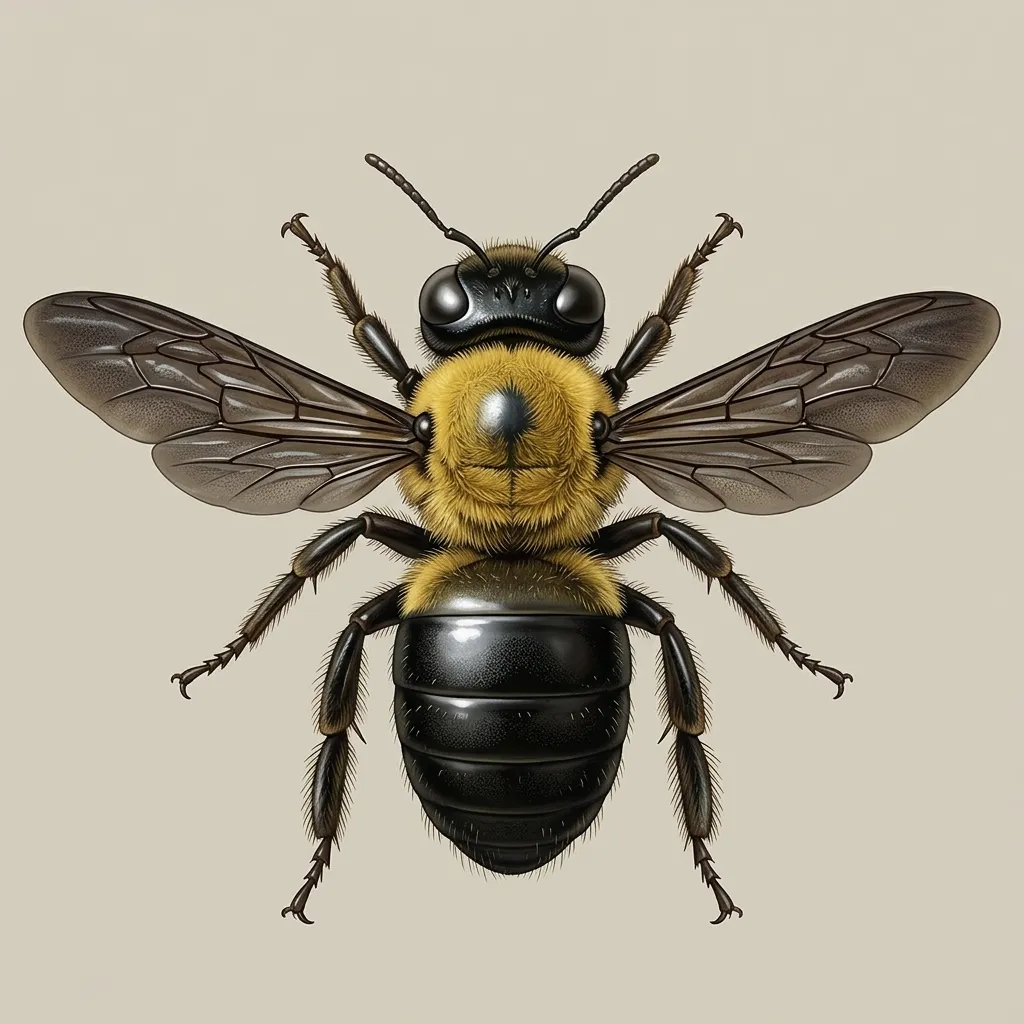
When are carpenter bees most common?
Carpenter bees become especially noticeable in spring and early summer when adults emerge and begin nesting activity.
Why are carpenter bees around my home?
Carpenter bees excavate tunnels in wood to create nesting chambers. They commonly target exposed wooden structures such as decks, railings, fascia boards, fences, and outdoor furniture.
Unlike termites, carpenter bees do not eat wood. They tunnel through it to establish nests.
Signs you might have carpenter bees
- Round holes approximately half an inch wide in wooden surfaces
- Sawdust collecting beneath wooden structures
- Large bees hovering around decks, railings, or rooflines
- Yellowish staining below nesting holes
- Repeated nesting activity in the same wooden areas
How does Flow solve the problem?
At Flow Pest Solutions, we inspect wooden structures to locate active nesting holes and identify areas vulnerable to future activity.
We use targeted treatments where appropriate and recommend repairs or protective measures to help discourage repeated nesting.